Experience the power and majesty of nature and have a “close encounter” with another species. Getting eye-to-eye with these gentle giants will transform your perspective of our relationship with the animal kingdom.
Details
- Time Needed: An afternoon to a few days
- Cost: $$
- Difficulty: Physically easy, but travel can be a challenge if opportunities aren’t close to where you live
- Other Variations: Get up close to other big wildlife – bison, elk, bears, bighorn sheep… Lots of possibilities even in the U.S.!
Perhaps the most exciting adventures for me are ones that lead to epic animal encounters! Feeling that connection with nature, feeling awe, and taking a moment to reflect on the miracle of life on Earth is a powerful experience.
I’ve always loved whales and dolphins. So since I was a little kid, I have sought out opportunities to see them in their natural surroundings. The beauty of living in the Inland Empire is that I am near some of the best places in the entire world to view whales in the wild. Monterey Bay, the Channel Islands, and most of the southern California coast are world famous places to see whales.
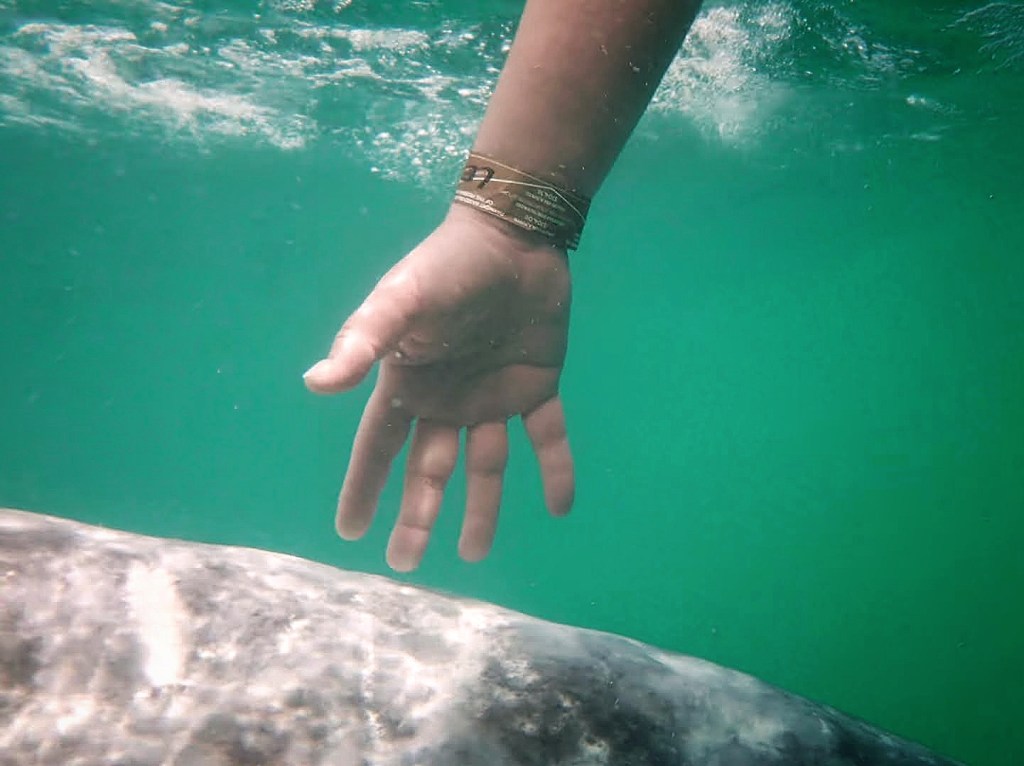
But if you do a day’s drive south into Baja, Mexico, you can find the only place in the world where you can reliably pet gigantic whales – no better way to feel the power of such a huge creature!
Our Adventure
Every winter, thousands of gray whales make the journey along a centuries-long migration route from their summer feeding grounds in Alaska, down the Pacific coast, to the lagoons in Baja to breed and give birth. While gray whales can be spotted anywhere along that journey, taking the trip to one of the breeding lagoons is an entirely different experience. In the protection of these lagoons, the whales seem to seek out human interaction. They fearlessly approach the boats, sometimes in swarming numbers, pushing and shoving for human connection.

We’ve observed gray whales in many areas of both California and Baja. But our favorite experiences have been in Laguna Ojo de Liebre (Scammon’s Lagoon), just outside of Guerrero Negro, BCS. While there are plenty of tour companies that will take you from California to the lagoons (by land or air), we prefer doing it ourselves. From the IE, it’s about a nine hour drive to Guerrero Negro and you pass through the beautiful vineyards and deserts of northern Baja.
Once you arrive, Guerrero Negro offers options for all levels of adventure. We’ve stayed in perfectly nice hotels in town many times. But on other trips, we’ve opted to wild camp on the beaches north of town or to rent a palapa and camp on the shores of the lagoon. But from any Guerrero Negro basecamp, the whales are close.
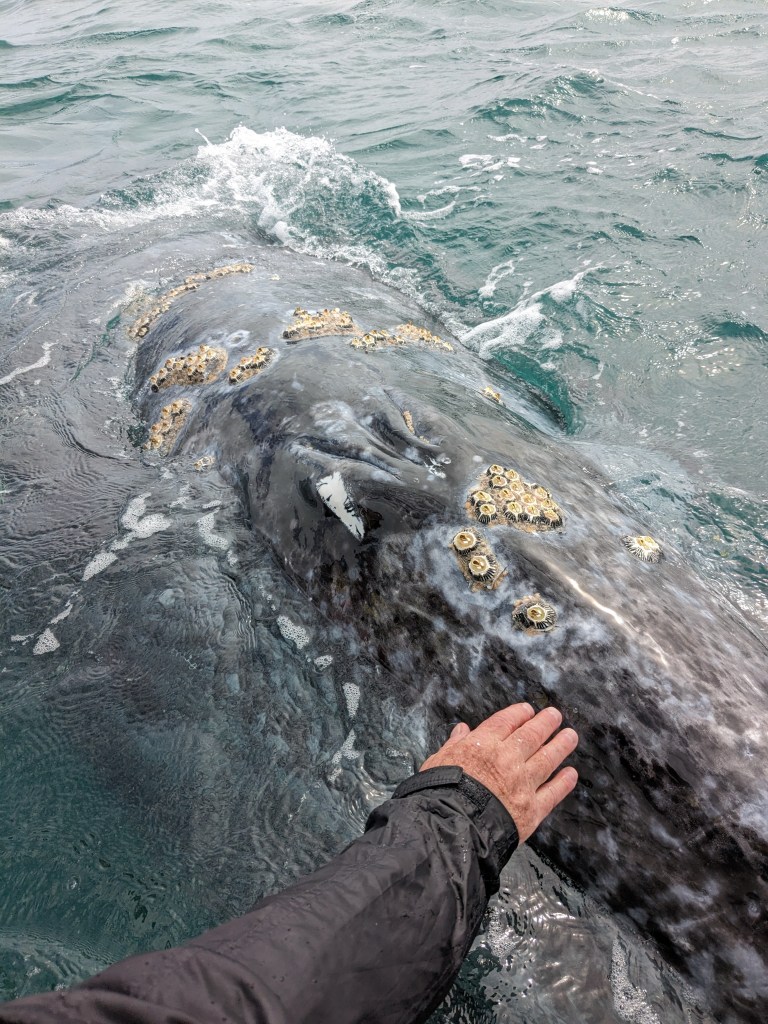
On our latest visit, we booked a trip through Malarrimo Eco-Tours. I will never do it any other way. We shared space with about six other people on a panga (a small, open motorboat that is common throughout Mexico). We departed from a secluded dock on the private property of the local salt works company. And from there, it took only 15-20 minutes to motor out to the middle of the lagoon where we were immediately surrounded by whales! We saw spouts in every direction and several curious whales chased our boat, looking to catch up.
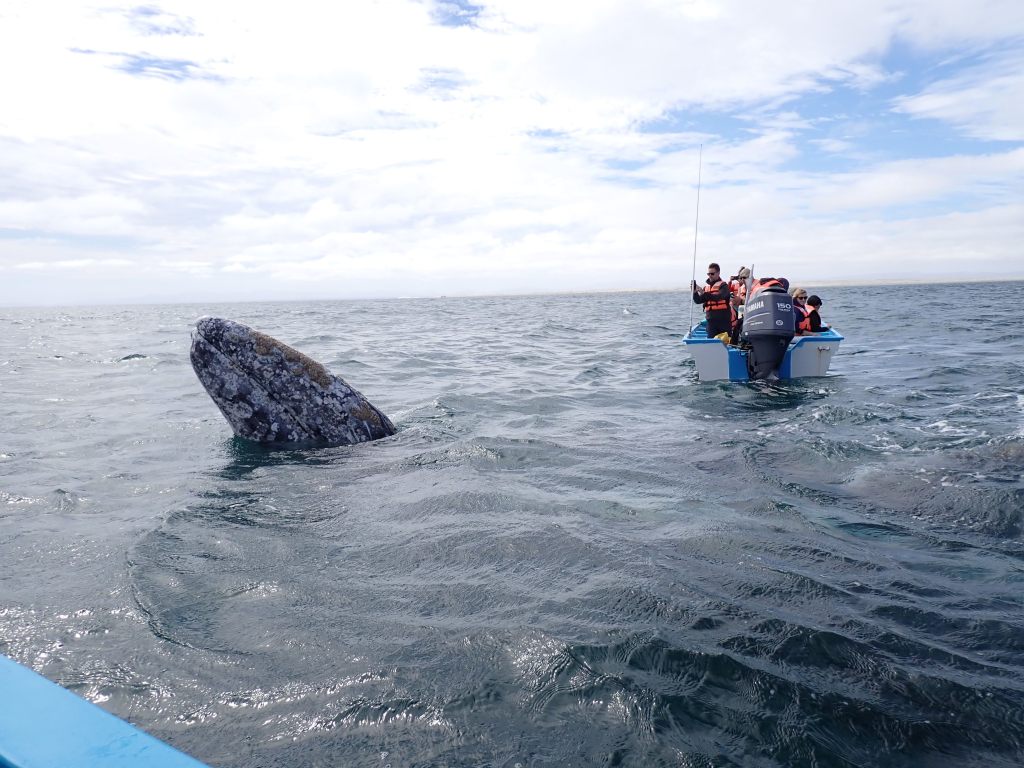
Over the next several hours, we had non-stop mind-bending interactions with as many as six whales at a time. They would often roll over like a playful dog, sometimes nudging or spinning the boat. But at no point did we feel threatened or nervous. We even had a visit from a baby gray whale towards the end of our trip.
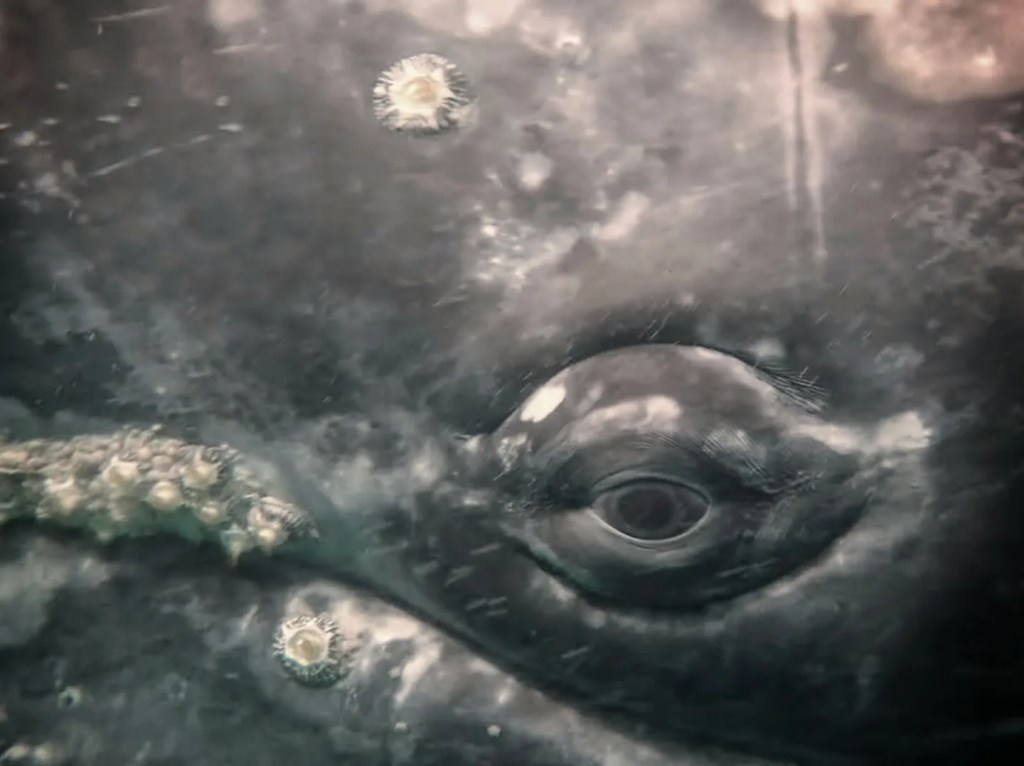
Having an experience like that can change your world view. It’s impossible to look a whale straight in the eye and not respect their sentience and intelligence. Everyone in our group came away with a deep respect for these creatures, their environment, and our role in preserving their futures. It will be an experience that none of us will ever forget — what more could you want in an adventure?!
Before You Go
Traveling to Mexico is not a casual endeavor. You are entering another country with its own rules, language, and norms. For some people (like me) that’s part of the fun. But it also deserves respect. Obey the laws, make sure you have the correct paperwork, take common sense safety precautions, and adopt the customs and courtesies of the local cultures.
Some key things to keep in mind, based on my experiences:
- Obtain a Forma Migratoria Múltiple (FMM), aka tourist card – You can now get them online, but I still find it easier to stop at either the San Ysidro or Mexicali ports of entry. Follow the signs to declare items (on the US side), park, and enter the building. FMMs come in two terms – one week (free) or six months (for a fee). On a few occasions I have been told I have to pay for the one week version. That’s not true, but it’s hard to fight it if you are stuck with a stubborn immigration official. It’s part of the “fun.” A lot of Americans choose to travel through Mexico without the card. While few ever report issues, my belief is it’s not worth the risk. Getting caught without it if a situation arises later will likely escalate things and it’s just plain respectful to follow the rules as written.
- Driving in Baja is not for the faint of heart – Highway 1 (the “Transpeninsular”) is a mostly shoulder-free, pothole ridden death trap. The locals aren’t afraid to take it fast, pass on blind curves, etc. Take your time, be patient, and make sure you’re comfortable with road side repairs before going too far away from civilization.
- Consider booking with Malarrimo Eco-Tours – In 2024, we paid on $50 each for a four hour excursion! They were professionals throughout and you can tell they truly respected and cared for the whales. All the rules governing marine mammal interactions are closely observed. Also, they are careful not to crowd the whales – finding corners of the lagoons where there are no other tourits. We’ve done the public tours from the main boat ramp many times (near the campground) and, while it may save you a few bucks, we had a totally different experience. The whales seemed overwhelmed by the number of boats and we simply never had the close interactions we had with Malarrimo.
- Gray whale season is December through May – We’ve always done our trips in February/March. That seems to be peak time and you’ll often see babies because it’s later in the season. By April, whales are starting to depart to head north.
- If Mexico is too much adventure for you but you still want to see whales… – There are incredible whale experiences to be had in California:
- Blue whales – The waters off of San Diego may be the best place on the planet to see the biggest animal to ever live. Peak season is May to July.
- Humpback whales – From Orange County to Monterey Bay, humpbacks are a common sight. They are some of the best whales to watch because of their propensity for breaching, mugging, and other engaging behaviors.
- Orcas – Monterey Bay remains a hot spot for orcas. But in recent years, more have been seen in the Channel Islands and even Orange County. Companies like Pacific Offshore Expeditions frequently organize trips that target orca encounters.
I love encouraging people to do this adventure. So please reach out if you want more tips!
 The I.E. Wanderer
Leave a comment